Sustainable Tourism: Travel with Purpose
Protecting the Land we call home
Meghalaya is home to South Asia's longest cave system—Krem Liat Prah, the biodiverse Siju Cave, and India's tallest plunge waterfall—Nohkalikai Falls. About 76% of the state is forested, with 105-125 sacred groves and 436 endangered plant species. Mawsynram, the world's wettest place, reflects the state's lush, rain-soaked landscape. The Khasi, Jaintia, and Garo tribes share a deep bond with nature, seen in traditions like sacred groves and living root bridges. Their close connection to the forest has fostered a culture of sustainability and ecological preservation for generations. In Meghalaya, one of India's greenest and most culturally rich states, sustainability is not just an idea- it's a way of life.
The Need for Preservation
Despite being one of the wettest regions in India, Meghalaya has seen a steady decline in its forest cover. A key driver is the continued felling of trees for firewood and timber to meet household needs. This degradation has led to over half of the state's 55,000 recorded springs drying up or experiencing a sharp decline in flow. Conventional tourism often strains local ecosystems, cultures, and infrastructure. But sustainable tourism flips the script. It supports local livelihoods, protects natural resources, and preserves indigenous traditions. It ensures that visitors not only experience the place but also contribute to its preservation.
Community-led Tourism
Meghalaya champions community-led tourism by empowering local guardians of the land and ensuring that benefits remain within the community. Mawlynnong, celebrated for its cleanliness and natural beauty, reflects a community united in preserving the environment while welcoming visitors. Kongthong thrives on its people, the unique Jingrwai Iawbei tradition, and a strong communal spirit that shapes its tourism identity. Umden stands out for its Eri silk heritage—an industry sustained through the collaborative efforts of the local community.
Celebrate Cultural Heritage
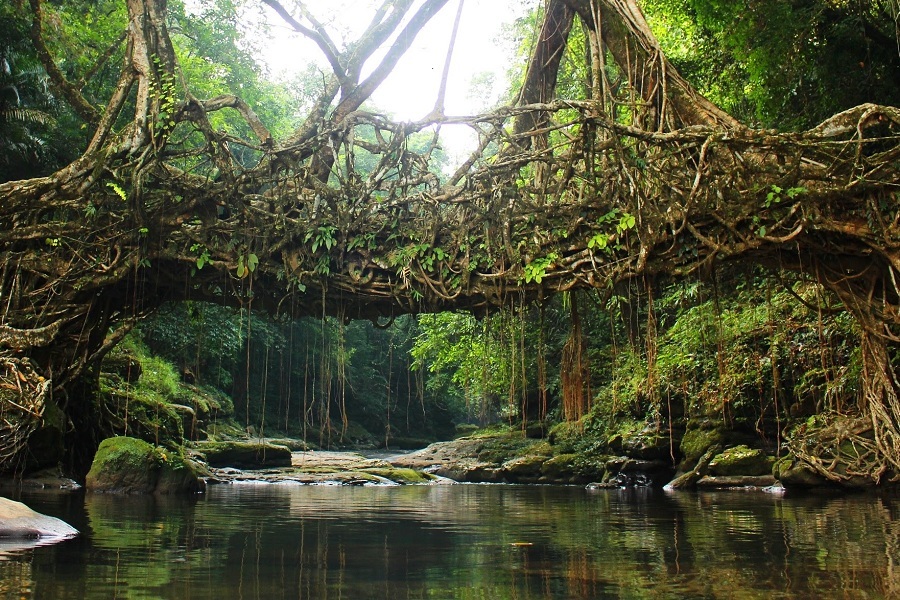
Meghalaya's cultural heritage is deeply intertwined with its landscapes and traditions. The Living Root Bridges, meticulously cultivated over generations, exemplify a profound harmony with nature. Sacred Groves serve as vital spiritual sanctuaries, safeguarding unique biodiversity. The towering Nartiang Monoliths stand as powerful reminders of a rich historical past and enduring tradition, captivating onlookers even today. These vibrant traditions showcase sustainable wisdom, inviting travellers to immerse themselves in a culture that profoundly respects nature, memory, and community.
Rural Tourism
Beyond the urban bustle, the villages of Meghalaya are rich with heritage, storytelling, craftsmanship, and sustainable living practices that have endured for generations. The Chandigre Rural Tourism Resort offers an immersive experience that highlights the richness of Garo culture. A trip to Daribokgre offers an informative journey into the Achik Mande or ‘people of the hills' way of life, their dietary habits, architecture, traditions and leisure activities.
Food Tourism
Meghalaya's cuisine and dietary habits are deeply rooted in age-old traditions of foraging wild edibles and self-sustenance, with ancestral knowledge passed down through generations. Events like the Culinary Cascade celebrate the state's rich gastronomic heritage and evolving culinary innovations. Meghalaya is also renowned for its high-curcumin Lakadong turmeric, named after the village where it is cultivated. A variety of wild edibles and endemic berries are vibrantly displayed in local bazaars and markets, making the state a destination for exotic fruits and culturally enduring recipes.
Supporting Local Economies
In an effort to develop sustainable tourism, Meghalaya has positioned local communities as key players in creating unforgettable experiences for visitors. Locals are actively involved in running homestays, offering guided tours, producing and marketing handicrafts, traditional weaving, and showcasing their culinary expertise. By supporting local economies, the state is moving toward a sustainable tourism model that generates employment without displacing people or disrupting their way of life.
Minimise Environmental Impact
By involving local communities in the management and upkeep of tourist sites, Meghalaya creates employment opportunities without displacing people, helping reduce rural-to-urban migration. Waste in tourist areas is managed using eco-friendly bamboo bins, reflecting the state's commitment to sustainability. Handicrafts and utility items made from bamboo and clay—often purchased as souvenirs—extend sustainable practices beyond the tourist visit. Rural tourism disperses visitor footfall across many destinations, preventing overcrowding and maintaining a balanced tourism flow. Recognition through awards like the “Best Tourism Village Awards,” recently given to Umden and Mawphlang, affirms Meghalaya's commitment to sustainable, heritage-based development.
What has the Government Done?
Government Initiatives: Meghalaya Community-Led Landscape Management Project (MCLLMP)
- Integrated Landscape Management
- Adopted a bottom-up approach, empowering 400 villages to restore land, water, and forest resources.
- Combined traditional knowledge with scientific and data-driven methods.
- Sustainable Livelihood Generation
- Introduced nature-based income sources like poultry, livestock, fertiliser production.
- Agri-horticulture, nurseries, and composting units generated ₹1.3 crore in additional income for participating villages.
- Mine Land Restoration
- Rehabilitated 672 hectares of mine-spoiled land using aromatic grasses (citronella, lemongrass).
- Ensured both ecological restoration and long-term income opportunities.
- Youth Engagement & Capacity Building
- Trained local youth to map, geo-tag springs, and develop balanced landscape management plans.
- Conservation of Living Root Bridges
- Supported research-based conservation and set up community nurseries and knowledge centres (Ïing Mariang and Shlem Jingtip).
- Conserved 131 Living Root Bridges (Jingkieng Jri) as of 2024.
- Payment for Ecosystem Services (PES)
- Provided annual financial incentives to landholders for forest conservation.
- Additional funding is available for ecologically sensitive areas such as sacred groves, root bridges, and elephant corridors.
How You Can be a Responsible Traveler in Meghalaya
- Stay Local, Buy Local:Choose homestays or locally-run guesthouses instead of big hotels. Buy handmade crafts, traditional weaves, and local produce from village markets. Every rupee spent locally helps preserve heritage and sustain livelihoods.
- Pack Light, Leave Lighter:Bring only what you need and take back only memories. Avoid bringing disposable items that add to waste. If you can, carry reusable water bottles and bags.
- Tread Lightly:Walk gently on trails, especially in sacred groves, forests, and areas with living root bridges. Stick to marked paths to protect fragile ecosystems. Don't disturb wildlife or pluck plants. Keep noise to a minimum and take only photos—nothing else.
- Respect Traditions:Ask before taking photos, and follow the guidance of your local host or guide. Participate in cultural experiences with curiosity and humility. What may seem unfamiliar to you is sacred to someone else.