Art and Handicrafts

Art & Handicrafts
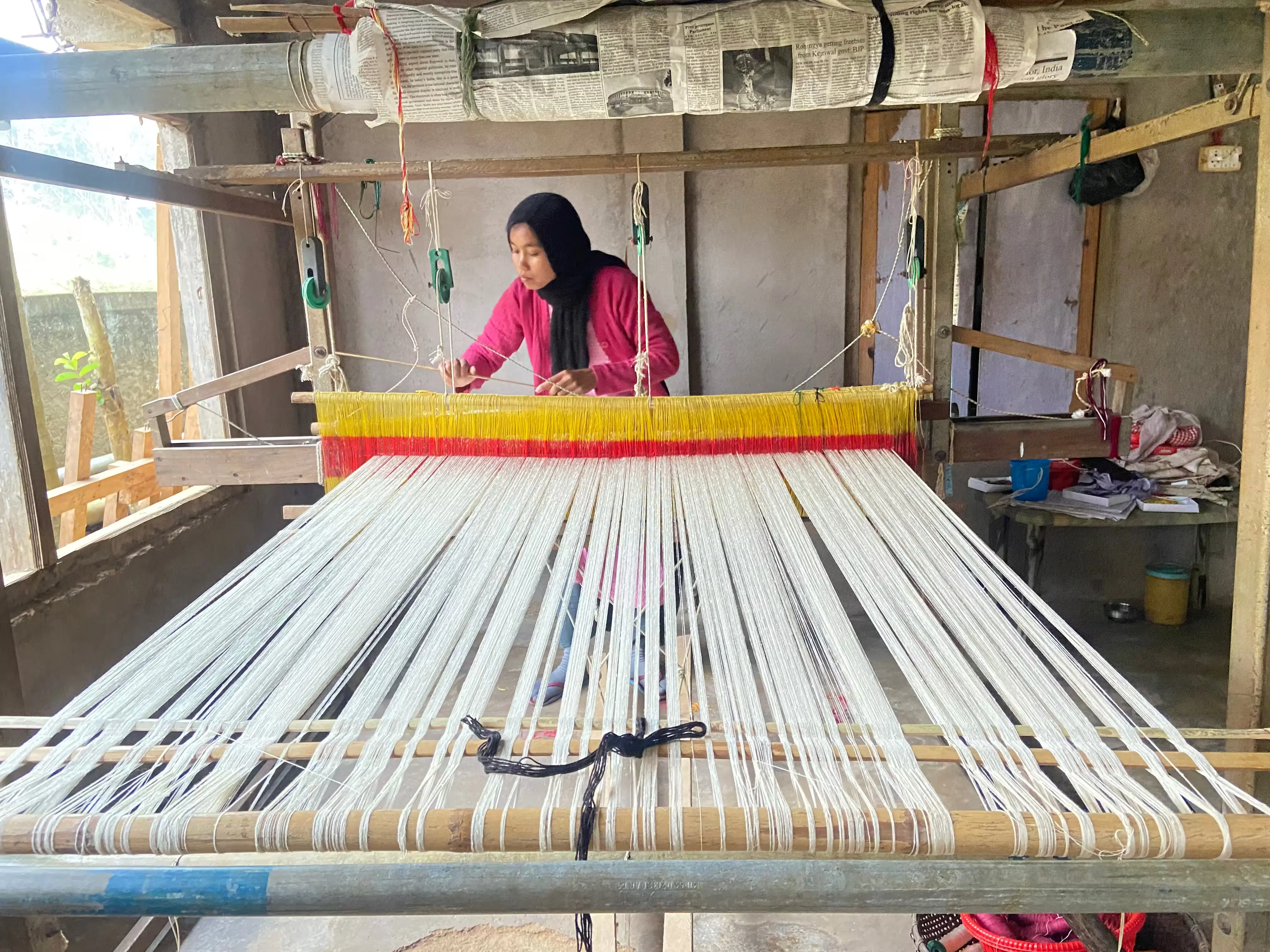
Rooted in deep cultural heritage and tribal expression, Meghalaya’s arts and crafts mirror the region’s vibrant soul, much like its celebratory festivals. The state’s artisans are renowned for bamboo and cane craftsmanship—seen in intricately woven baskets, mats, and furniture that blend function with artistry. Weaving is equally important, especially among the Khasi, Jaintia, and Garo communities, where traditional handlooms produce vibrant textiles and shawls bearing tribal motifs. Bamboo and cane craftsmanship form the backbone of Meghalaya’s artisanal heritage, with the Khasi, Garo, and Jaintia tribes each showcasing unique styles. Among the Khasis, items like the Khoh (conical basket), Knup (bamboo rain shield), and intricately woven mats are common household essentials. These are not only practical but also skillfully designed, reflecting their deep-rooted connection to nature. The Garos excel in basketry and a technique called poker work, where designs are artistically burnt onto bamboo surfaces using heated metal rods. Their crafts range from sturdy storage containers to decorative panels. The Jaintias, meanwhile, are known for their finely woven Tlieng mats—renowned for both their durability and intricate patterns—as well as fish traps and utility baskets used in daily life. As for textiles, the Garo tribe stands out for its vibrant handwoven fabrics, especially the Dakmanda, created using backstrap looms. These textiles often feature bold geometric designs and are dyed using local natural pigments. The Khasis, though less active in weaving today, maintain traditions through the Jainsem, a draped garment for women, and Ryndia—eri silk woven and dyed sustainably in villages like Umden. Among the Jaintias, weaving is done using loin looms, producing variations of traditional garments like the Jainkup, often in subdued tones suited to everyday and ceremonial use. Together, these crafts represent a tangible link to tradition, community, and creative resilience across Meghalaya’s hills. Wood carving, musical instruments, beadwork, and intricate silver jewelry also play a role in storytelling and ritual. Much like Meghalaya’s festivals, its crafts aren’t just aesthetic—they are a celebration of identity, passed down through generations and reimagined in modern contexts.
Rooted in deep cultural heritage and tribal expression, Meghalaya’s arts and crafts mirror the region’s vibrant soul, much like its celebratory festivals. The state’s artisans are renowned for bamboo and cane craftsmanship—seen in intricately woven baskets, mats, and furniture that blend function with artistry. Weaving is equally important, especially among the Khasi, Jaintia, and Garo communities, where traditional handlooms produce vibrant textiles and shawls bearing tribal motifs. Bamboo and cane craftsmanship form the backbone of Meghalaya’s artisanal heritage, with the Khasi, Garo, and Jaintia tribes each showcasing unique styles. Among the Khasis, items like the Khoh (conical basket), Knup (bamboo rain shield), and intricately woven mats are common household essentials. These are not only practical but also skillfully designed, reflecting their deep-rooted connection to nature. The Garos excel in basketry and a technique called poker work, where designs are artistically burnt onto bamboo surfaces using heated metal rods. Their crafts range from sturdy storage containers to decorative panels. The Jaintias, meanwhile, are known for their finely woven Tlieng mats—renowned for both their durability and intricate patterns—as well as fish traps and utility baskets used in daily life. As for textiles, the Garo tribe stands out for its vibrant handwoven fabrics, especially the Dakmanda, created using backstrap looms. These textiles often feature bold geometric designs and are dyed using local natural pigments. The Khasis, though less active in weaving today, maintain traditions through the Jainsem, a draped garment for women, and Ryndia—eri silk woven and dyed sustainably in villages like Umden. Among the Jaintias, weaving is done using loin looms, producing variations of traditional garments like the Jainkup, often in subdued tones suited to everyday and ceremonial use. Together, these crafts represent a tangible link to tradition, community, and creative resilience across Meghalaya’s hills. Wood carving, musical instruments, beadwork, and intricate silver jewelry also play a role in storytelling and ritual. Much like Meghalaya’s festivals, its crafts aren’t just aesthetic—they are a celebration of identity, passed down through generations and reimagined in modern contexts.