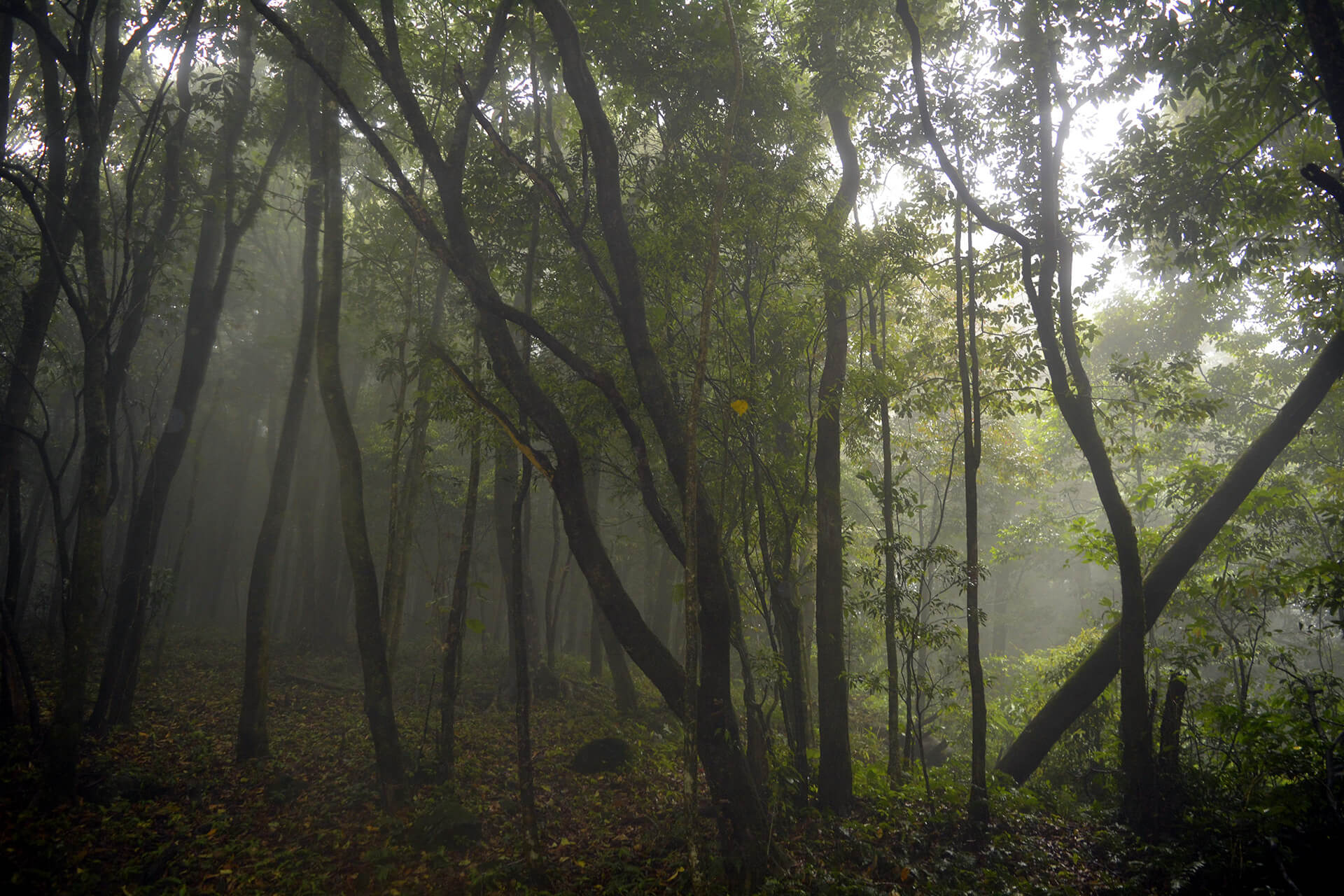
Nokrek Biosphere Reserve
Venture into Meghalaya’s only UNESCO-recognised Biosphere Reserve, the Nokrek Biosphere Reserve, a wild, whispering world where ancient forests stand untouched. Step off the grid and into a landscape shaped by time and tradition where every step tells a story of life, evolution, and indigenous harmony.

Nokrek Biosphere Reserve
Flora & Fauna Highlights
Home to the rare, the wild, and the untamed, Nokrek bursts with ecological marvels. The forest floor is alive with wild bananas, medicinal herbs, and whispering gingers. Look out for:
- Nokrek’s forests are rich in plant life, featuring vibrant species like the endemic Indian wild orange (Citrus indica), along with silk cotton tree (Bombax ceiba), hairy sterculia (Sterculia villosa), and golden shower tree (Cassia fistula).
- The reserve shelters several vulnerable and threatened species, including the slow loris, the giant flying squirrel (Petaurista philippensis), and the pig-tailed macaque (Macaca leonina).
- Nokrek is also a haven for rare and endangered wildlife, such as tigers, leopards, elephants, and the endangered hoolock gibbons, India’s only native apes, who receive special conservation attention due to their rapidly declining numbers.
Local Culture & Conservation
Meet the Garo people, proud guardians of Nokrek’s wild heart. Calling themselves Achik Mande, or the ‘people of the hills’, their lives are deeply woven into the rhythms of the forest. Every tradition, every belief, echoes a profound respect for nature. Wander through their world and discover how this community lives in harmony with their land:
- Hear stories of forest spirits that protect sacred groves.
- Learn how foraging for honey, wax, and forest herbs is guided by age-old wisdom.
- See how local hands lead the charge in community-run conservation efforts.
Things to Do
Step into the wild and discover Nokrek like never before. From dense forests to distant peaks, experience the wilderness, untamed beauty and trails that lead to new discoveries.
- Hike to the misty heights of Nokrek Peak.
- Follow birdwatching trails echoing with the calls of hornbills.
- Join a local guide on an ethnobotanical walk to uncover forest healing secrets.
- Camp under starlit skies in eco-friendly villages like Tura or Daribokgre.
- And don’t forget your camera, early monsoon paints the forest in unforgettable light.
How to Get There
- The nearest town is Williamnagar, which is approximately 15 km away.
- From Mylliem, the most direct route is via NH106 and NH127B, covering approximately 122 km in about 3 hours.
- Entry to the park is typically through Daribokgre village, which serves as the starting point for treks to Nokrek Peak and the Citrus Gene Sanctuary.
Travel Tips
- Best Time to Visit: October to April.
- Moderate trekking required – wear sturdy shoes.
- Limited connectivity – go offline, reconnect with nature.
- Respect tribal norms and forest sanctity.
- Arrange for a local guide or a travel buddy who is familiar with the local language and location.