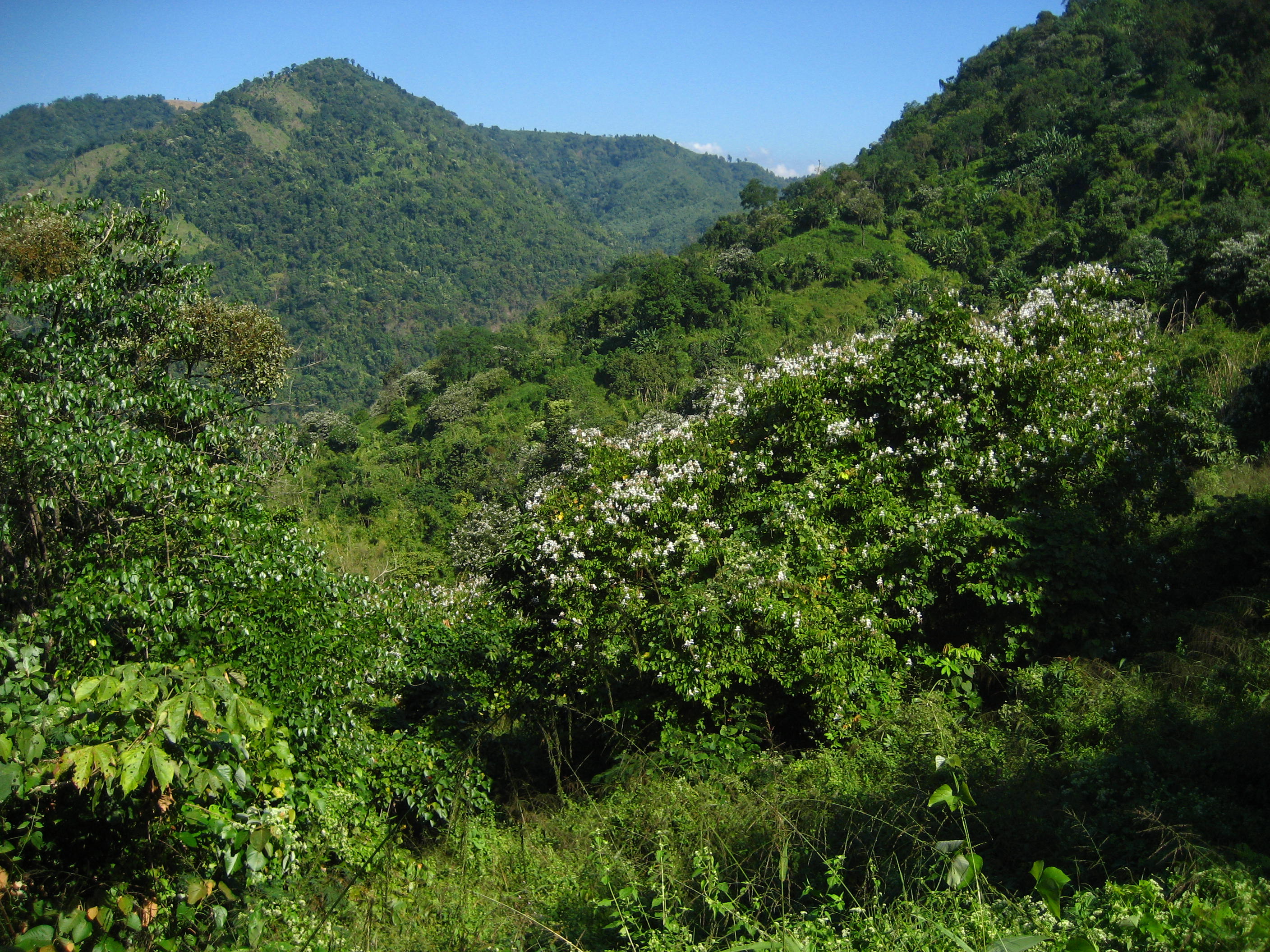
Balpakram National Park
Sooth your souls in the landscape that shifts from sunlit cliffs and vast table-top plateaus to shadowy gorges and ancient caves. Balpakram National Park or the “Land of Spirits” is a surreal wilderness where biodiversity and folklore coexist in haunting beauty.

Balpakram National Park
Wildlife Highlights
Home to rare, elusive, and majestic wildlife, Balpakram is a sanctuary for some of India’s most elusive inhabitants. The dense forest and rugged terrain make it a prime habitat for:
- Tigers and elephants serve as the park’s iconic flagship species, symbolising its rich wildlife heritage.
- The endangered Hoolock gibbons, the only apes native to India, can also be spotted swinging through the treetops here.
- The park is home to a variety of other wildlife, including deer, leopards, wild buffalo, wildcats, wild cows, pheasants, and the majestic Great Indian Hornbill.
Flora of the Spirits
The park’s unique ecology nurtures an incredible range of flora, from wild orchids to moss-draped ferns, including carnivorous plants that thrive in its misty forest floors.
- Among Meghalaya’s botanical wonders is Nepenthes khasiana, a rare, carnivorous pitcher plant endemic to Meghalaya.
- A verdant world of wild orchids, graceful tree ferns, and moss-laden herbs thrive in this lush, untouched environment.
- Hidden in the forest are medicinal plants known only to the wisdom of local healers and shamans.
Spiritual Significance
To the Garo tribe, Balpakram is sacred ground believed to be the resting place of departed souls. Ancient oral traditions speak of phantom lights, invisible bridges, and healing caves. Some say the spirits of ancestors still walk these cliffs, guarding the forest and guiding those who respect it.
Things to Do
From breathtaking viewpoints to hidden caves and rich wildlife encounters, Balpakram offers a journey into nature’s untouched wilderness. Whether you're a trekker, nature lover, or cultural explorer, every trail here is worth exploring for its stunning terrain and for uncovering hidden stories.
- Trekking across table-top plateaus and forest trails offers a perfect blend of adventure and natural charm.
- Birdwatching, particularly during the migration seasons, offers a chance to spot a vibrant variety of avian visitors.
- A paradise for nature photographers, with veiled hills, blooming wilderness, and fleeting encounters with rare creatures.
- Cave exploration takes you on guided tours into limestone caverns steeped in ancient legends.
- Visit nearby Garo villages for a meaningful cultural exchange, where stories are shared and rituals come alive.
How to Get There
- The park is located near Rongchenggiri in South Garo Hills.
- There’s no direct public transport to the park, so hiring a vehicle from Tura or Baghmara is essential.
- From Baghmara, the closest town to the park, local taxis or hired jeeps are available, but roads can be rough—best suited for SUVs.
- From Shillong, take NH106 and SH4 via Nongstoin and Baghmara.
- Expect a 9–10 hour drive through scenic but winding terrain.
- The distance from Shillong Airport is 230 km.
- The distance from Guwahati Airport is 284 km.
Travel Tips
- Best Time to Visit: November to April.
- Bring sturdy shoes for trekking and cave visits.
- Accommodation is basic – homestays and forest rest houses are available in Baghmara.
- Arrange for a local guide or a travel buddy who is familiar with the local language and location.